Browse beads for pens
Compare focal designs and confirm the specifications for your pen blank.
Explore →Updated October 1, 2026 · by the Qula Craft Sourcing Team — the people who quote and pack these lines every week.
For labeled measurement diagrams and a worked layout calculation, read how to measure pen beads and choose the right fit.
There is no single hole diameter that fits every beadable pen. Measure the rod that passes through the beads, including any threaded section they must slide over. Share that measurement and the usable beading length with your enquiry. The outside diameter of the pen grip does not establish the rod size.
Check the hole direction against the way you want the design to face. A top-to-bottom hole may suit an upright focal design; a side-to-side hole can change its orientation. Ask us to confirm the exact SKU with a photo or sample. Never force a bead onto a rod that is too wide.
For example, YA425 heart acrylic beads have a listed 2.5 mm hole. This is a product measurement, not a universal pen-fit guarantee. The other acrylic styles below require hole-diameter confirmation before ordering.
Browse acrylic beads for round, leaf, heart and novelty shapes, or beads for pens for focal designs. Confirm the material on the individual product page. Do not assume that every bead in a pen photograph has the same material, hole size or supply unit.
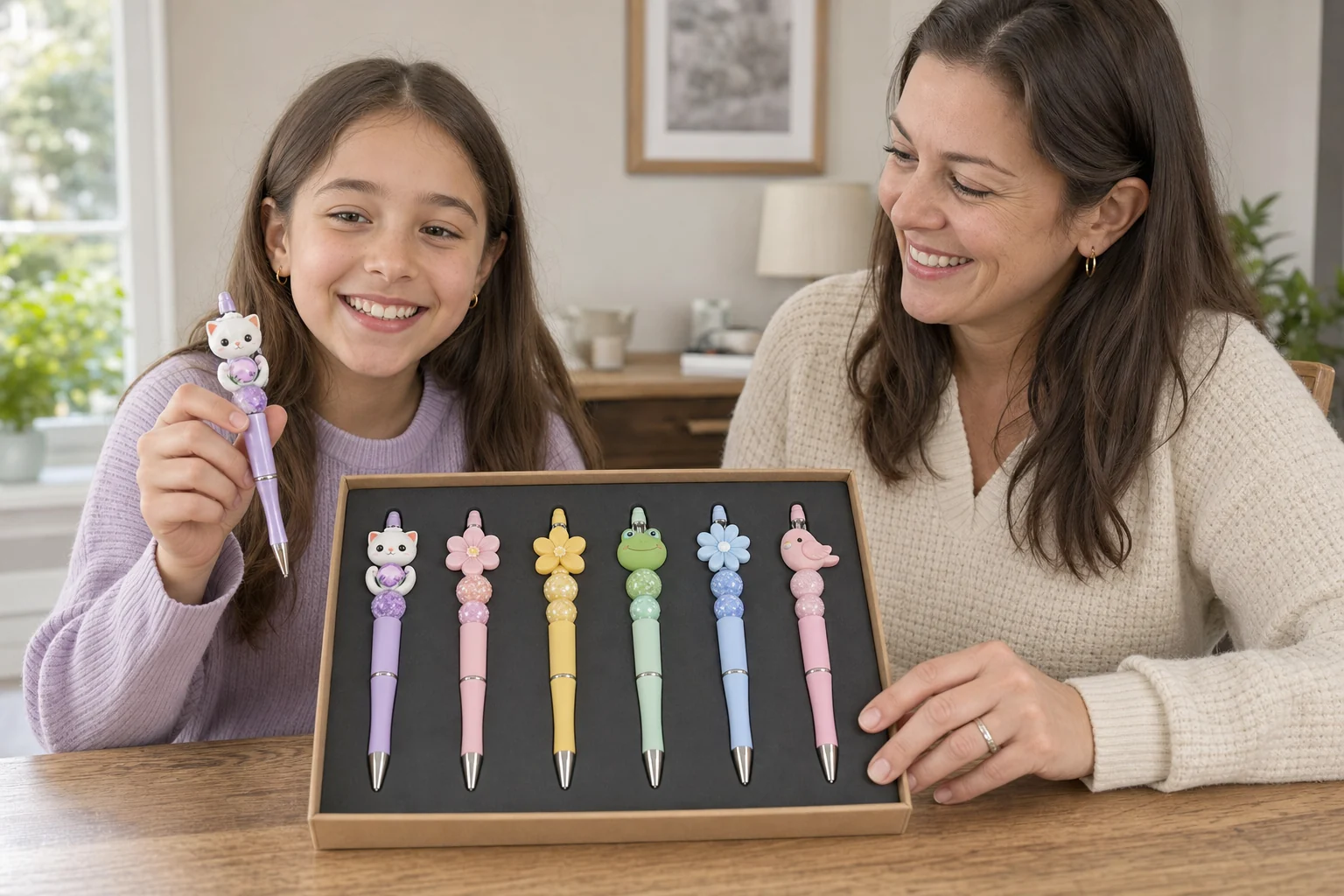
Choose a focal shape first, then compare its height and width with the available rod length and any spacers you plan to use. Test an assembled sample for balance, clearance and the intended orientation. Styling photos illustrate an idea; pen blanks and other props are not included unless the quotation explicitly lists them.
These are the supplied bead dimensions and pack references. Pack size does not establish the minimum order. Send the SKU and your pen-rod or cord measurement so we can confirm suitability.
| Product | Listed size | Pack reference | Hole fit |
|---|---|---|---|
| YA893 · AB swirl round | 15 mm diameter | 100 pieces/bag | Diameter to confirm |
| YA690 · AB leaf | 12 × 23 mm | 100 pieces/bag | Diameter to confirm |
| YJ145 · AB heart | 19 mm listed size | 100 pieces/bag | Diameter to confirm |
| YA449 · Textured candy | 16 mm listed size | 200 pieces/bag | Diameter to confirm |
| YA425 · AB heart | 16 × 18 mm | 500 g/bag | 2.5 mm; compare with your rod |
| YA417 · Pig | 19 × 26 mm | 100 pieces/bag | Diameter to confirm |
| YA382 · Cupcake | Dimensions to confirm | 100 pieces/bag | Diameter to confirm |
For YJ145 and YA449, ask which measurement axis the listed size describes if your design has limited clearance. For YA382, request dimensions before planning your bead arrangement.
A 100-piece bag and a 500 g bag are different ordering units. Do not treat 500 g as 500 pieces or assume a fixed bead count without confirmation. Compare quotations using the same product, color selection, pack unit and quantity.
For a pen project, calculate the beads required from your own design: finished pens multiplied by beads of that SKU per pen. Agree any allowance for sampling or assembly separately. Confirm whether colors are mixed or selected and whether different SKUs can ship together.
Prices, minimum quantities, sample fees and dispatch dates are confirmed in the quotation. The pack references above are not a price list or a promise that one bag is the minimum for every product.
Use the pen blank you intend to sell with the beads. Check that each bead slides into place without force, sits in the intended direction and leaves room for the end fittings. Review the finish and color against your approved sample, then confirm the packaging for the order.
For a themed range, start with a small selection you can compare together, such as hearts, animals or desserts. Choose the quantity from your sales plan and confirmed minimums. See our sample and inspection checklist and craft packaging guide for the details to agree before a bulk order.
Custom focal beads and finished accessories are reviewed individually. Design, sample, tooling and packaging details are agreed by email. Explore custom components and finished accessories when you need a coordinated collection.
It depends on the pen rod. Measure the rod and any threaded section the bead must pass over, then confirm the bead hole diameter and direction for the exact SKU.
No. YA425 has a listed 2.5 mm hole; the other acrylic styles in this guide require hole-diameter confirmation. Check dimensions and fit with your own pen blank before ordering.
No. Pack size and minimum order are separate. Confirm the minimum quantity, price and color selection for each SKU by quotation.
Custom components and finished accessories can be discussed. Design, material, sample, tooling and packaging details are reviewed for the project and confirmed by email.
Send the SKUs you like, your pen-rod measurements, required quantities and destination. We will review hole fit, packaging and sample requirements with your quotation.
Compare focal designs and confirm the specifications for your pen blank.
Explore →Browse shapes, pack units and per-SKU enquiry options.
Explore →Discuss bulk bags, retail packs and labeling for your order.
Explore →