How to Build a Private Label Craft Supply Collection
Plan product selection, branded packaging, sample approval and reorders for a private label craft range.
Read guide →Updated October 16, 2026 · by the Qula Craft sales team
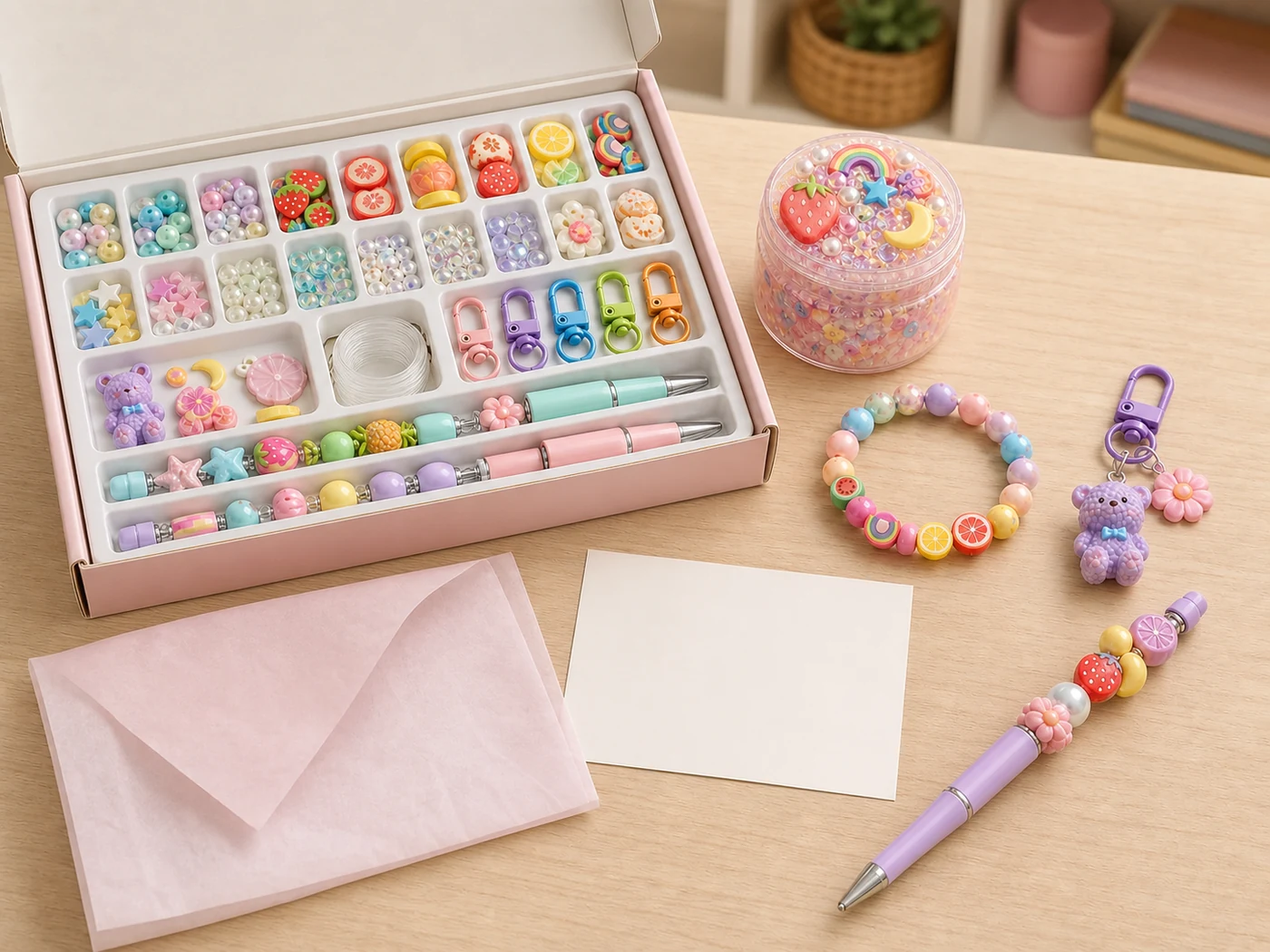
The options below are starting points for a packaging discussion, not fixed-price or performance specifications. Request prices for the same SKU, net weight or piece count, order quantity and destination. Confirm whether containers, closures, labels, filling, sorting and outer cartons are included.
| Format | Possible use | Details to quote | Sample check |
|---|---|---|---|
| OPP or resealable bag | Refill packs or separated components | Material, thickness, filled dimensions, seal and label | Confirm the closure retains the selected contents and the pack handles as intended |
| PET bottle | Small portions or display packs | Container dimensions, opening, cap, fill quantity and label | Check filling and dispensing with the selected slices, beads or sequins |
| Wide-mouth jar | Packs where buyers need access to the contents | Jar and lid dimensions, fill quantity, closure and label | Review access, closure, headspace and the packed carton |
| Compartment box | Assortments that need separate sections | Box dimensions, compartment layout, quantities per section and sorting | Check that the selected contents stay in their intended compartments during handling |
| Printed gift box | A coordinated kit or presentation pack | Box structure, insert, artwork, print finish and assembly | Approve an assembled sample with the intended contents and layout |
Confirm the material and closure for the exact pack. An OPP bag is not automatically resealable, and nominal bottle or jar capacity does not establish how many grams or pieces of a particular craft material will fit. Use a filled sample to agree the quantity and appearance.
Ask for outer carton length, width and height, gross weight, units per carton and total carton count for each proposed format. Compare the same total product quantity. A packaging change can alter both dimensions and weight, but it does not establish a fixed freight multiplier.
DHL Express explains dimensional weight and comparison with actual weight. Its example uses dimensions in centimeters divided by 5,000. Service rules differ: DHL eCommerce's US guidance uses a divisor of 6,000 for centimeter measurements and describes an exception for some domestic packages. Confirm the calculation, rounding and charges for your carrier and service.
Use the agreed ICC Incoterms® rule and named place to clarify delivery responsibilities, costs and risks. Ask the quotation to list what is included. The packaging format alone does not tell you who pays freight or which charges are covered.
Bulk shipment followed by local repacking is another option to cost. Compare any freight difference with local containers, labels, labor, storage and handling. Ask your broker about the product and pack configuration before finalizing the shipment; the International Trade Administration's HS-code overview explains the classification system.
For branding, confirm the label or print area, artwork dimensions, application method and approved proof. Discuss the intended sales channel and labeling needs using the labeling guide and private label packaging page. Approve the finished sample before bulk packing.
Do not assume that a PET container or paper box makes the complete package recyclable or compostable. Material, coatings, closures, labels and available facilities matter. The US FTC's environmental-claims guidance explains the evidence and qualifications needed for recycling and composting claims. Confirm support for the exact package and intended market before printing such wording.
Request an itemized quotation separating product, packaging, filling or sorting, one-time setup, samples and freight where applicable. Confirm MOQ for each pack or design, sample timing, bulk packing lead time and shipping time separately. Mixed pack formats need their own quantities and approval details; availability and timing are confirmed for the project.
Send the SKUs, quantity per pack, total quantity, packaging requirements and destination. We will review the details and confirm pricing, samples, MOQ and timing in your quotation. Further measurements or sample approval may be needed.
Compare itemized quotations for the same product quantity, pack requirements and order volume. Include containers, labels, filling or sorting, outer cartons and freight; a bag or bottle name alone does not establish the lowest total cost.
The filled pack and carton layout can change dimensions, gross weight and units per carton. Request those measurements and compare the same shipment quantity using the chosen carrier and service rules; there is no fixed bag-to-bottle freight multiplier.
Send the SKUs, format and quantity for each pack. Availability, MOQ, sample approval, packing cost and timing for mixed formats must be confirmed in the quotation.
Plan product selection, branded packaging, sample approval and reorders for a private label craft range.
Read guide →Sizes, gram math, stock vs custom MOQ, quality checks and packaging
Read guide →Pack format drives volumetric weight — here is how that turns into a freight bill.
Read guide →