Decoden Supplies: What Goes on a Phone Case
Choose flatbacks and plan focal, mid-size and filler roles.
Read guide →Updated August 2026 · by the Qula Craft Sourcing Team
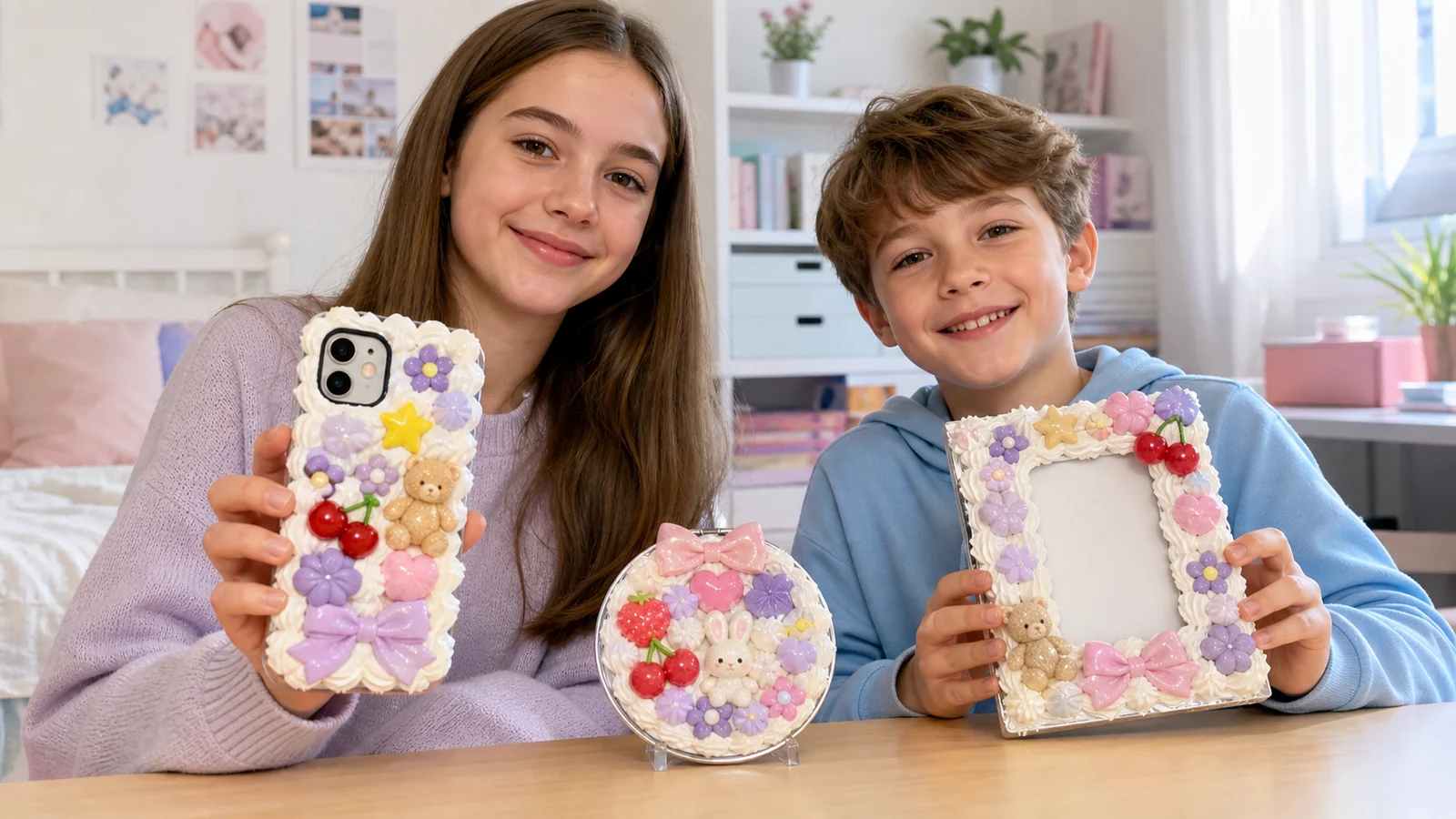
Maker communities ask this constantly because retail marketplaces are easy to browse but difficult to evaluate. The same photograph may describe a flatback cabochon, a drilled pendant, a miniature with a rounded base or a mixed scoop. Those products look similar in a listing and behave very differently on a case.
A business buyer should begin with a specification, not a vendor list. Write down the surface you decorate, the finished theme, the three size roles you need, acceptable color variation, pack format and destination market. That turns “cute charms in bulk” into a quote a supplier can answer without guessing.
For most phone cases, mirrors and boxes, the useful product is a flatback resin cabochon. A broad, level reverse side gives adhesive more contact area. A drilled charm is designed to hang from a ring; a rounded miniature may rock on the surface and catch on bags or pockets.
Request three dimensions rather than a single advertised size: maximum width, maximum height and overall thickness. Also ask for a clear photo of the reverse. Two pieces can both be listed as 25 mm while one has a 22 mm flat footprint and the other touches the base at only a narrow ridge.
A practical wholesale range has three jobs. Focal pieces carry the theme and stop the scroll. Mid-size pieces repeat its colors and motifs. Fillers close awkward gaps and are consumed fastest. Put most of your design variety in the middle tier, but put the deepest quantity into versatile fillers.
| Role | What to buy | What to check |
|---|---|---|
| Focal | A small number of large statement shapes | Face detail, footprint, weight and visual originality |
| Mid | Several supporting designs in the same palette | Color match and repeatability across bags |
| Filler | Small stars, fruit, bows, hearts or neutral accents | Piece count, edge finish and replenishment availability |
Do not let a “random mix” become your whole collection. It can be useful for studio play, but it is hard to photograph consistently, name as a repeatable SKU or reorder after one motif sells out.
Recent decoden discussions often complain that the easiest-to-find charms are copies of famous characters. That is not merely a taste problem for a seller. The USPTO explains that trademarks identify the source of goods and help guard against counterfeiting; importing or reselling a recognizable copied character can expose a brand to marketplace takedowns, customs action or supplier disputes.
Ask for original, generic or buyer-owned artwork. Useful themes do not require borrowed intellectual property: bakery, ocean, garden, celestial, retro fruit, school, pets and seasonal color stories all create a recognizable range. If you commission a custom mold, put artwork ownership, permitted use and whether the mold is exclusive into the written order terms.
For molded pieces, inspect paint registration, bubbles, tackiness, sharp flash, warped backs and color consistency. Photograph ten pieces together on a neutral background; isolated hero photos hide variation. Then test the actual combination of case material, base medium and adhesive you plan to sell.
Keep an approved sample or a dated photo sheet as the reference for bulk inspection. “Good quality” is subjective; “no sharp flash, flat reverse, face print within the molded border and color close to the approved sample” is checkable.
Small decorative pieces are not automatically children’s toys. The seller or importer decides the finished product’s intended use, age grading and applicable rules. If a finished item is a children’s product in the United States, the CPSC small-parts guidance explains the small-parts test, choking-hazard labeling and certification responsibilities.
Do not turn a supplier’s general test report into a blanket claim for every finished case. Confirm the material, batch, age grade and destination market with the retailer or compliance adviser responsible for the final product. Keep decorative craft components clearly labeled as non-edible.
Compare suppliers on the same brief. A quote that omits packing, freight or sample approval is not cheaper; it is incomplete. For the product-selection side, continue with our decoden size and material guide. For the quality gate, use the sample and inspection checklist.
Send a theme, palette, target sizes, quantity by design and destination. Start with the live kawaii resin flatback charms catalog; we will map stock flatbacks and custom generic options into a comparable quote without relying on copied character artwork.
Choose flatbacks and plan focal, mid-size and filler roles.
Read guide →Turn subjective quality into an approval checklist.
Read guide →Plan warnings and channel-specific paperwork.
Read guide →