How to Source Polymer Clay Sprinkles in Bulk
Sizes, gram math, stock vs custom MOQ, quality checks and packaging
Read guide →Updated July 6, 2026 · by the Qula Craft sales team
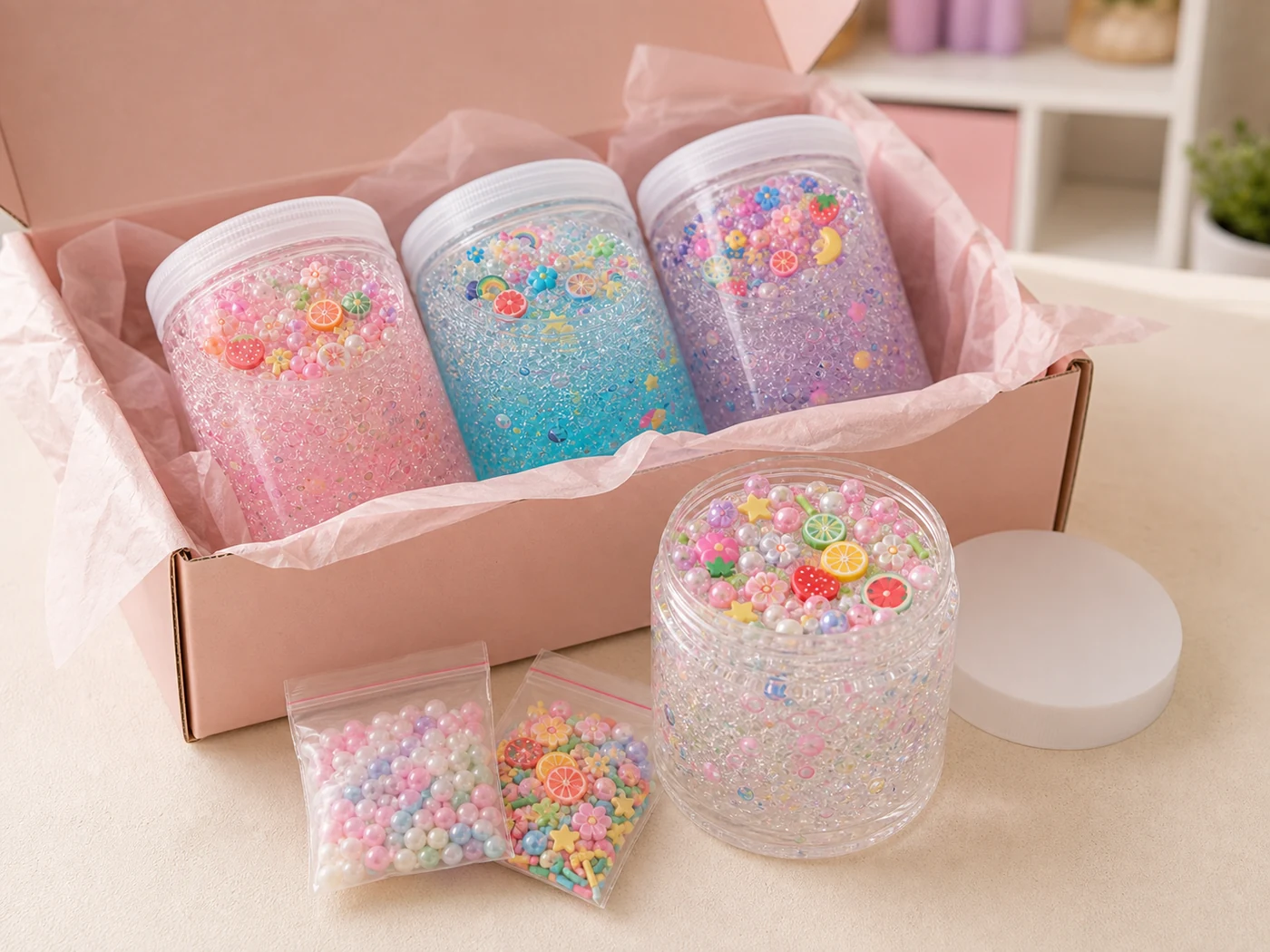
| Polymer clay slices | Resin charms | |
|---|---|---|
| Visual role | All-over sprinkle texture, color story | Single centerpiece, theme anchor |
| Cost logic | Priced per kg — pennies per jar | Priced per piece |
| Usage per 8oz | 5–15g | 1–3 pieces |
| Feel in slime | Slight crunch, stays suspended | Solid piece, customers dig it out and keep it |
| Reusability | Usually stays in the slime | Often kept as a mini toy — add-on value |
| Best slime types | Clear, crunchy, jelly | Butter, cloud, themed DIY kits |
Shops that photograph well without overspending typically put ~70% of their decoration budget into clay slice mixes (bulk kilograms, many themes) and ~30% into resin charms (counted pieces, fewer designs). One charm makes the product photo; the slices make the texture story. Ordering both from one supplier keeps the color stories matched — a strawberry theme where the charm red and the slice red disagree looks cheap.
Slime is wet chemistry. Dye migrating out of a cheap slice will tint a whole batch of clear slime pink overnight. Before committing to any new mix (ours included):
Our production includes a colorfast check before shipping; see the quality & safety page for the full QC chain.
For slime: 2–5mm slices for standard topping, 5–8mm chunky pieces for butter slimes. Evergreen themes: fruit (year-round #1), kawaii animals, hearts/stars; seasonal spikes follow the holiday calendar · Slime business starter supply checklist — pumpkins in September sell what snowflakes sell in November. Ready-made themed packs are on the slime charms page — from 30g bags to 1000g bulk.
Clay slices and resin charms are not just two looks at two prices — they are made by different processes with different economics. Polymer clay is PVC-based and cured at around 129–135 °C, built as canes and sliced, so one cane produces a very large number of pieces and the pattern runs through each one.
Resin charms are cast one mould-cavity at a time, and a flexible mould yields roughly 25 to 100 castings before fine detail degrades. That is the real reason a detailed charm costs more per piece than a slice, and why bespoke charm shapes carry tooling cost while a custom slice mix usually does not.
Send quantity, size range, packaging and destination — complete specs get an accurate quote in one round, usually within 12–24 hours.
They are decorative, non-edible craft materials. Colorfast polymer clay and cured resin are standard in the slime industry, but products must carry non-food and small-parts warnings — especially for kits aimed at children.
Typical usage: 5–15g of clay slices per 8oz slime for an even sprinkle look, plus 1–3 resin charms as centerpieces. Heavier topping looks premium but raises your per-jar cost fast.
Well-made slices should resist color bleed, but every new supplier batch should still be tested: soak slices in warm water and in your activator solution for 24 hours — the liquid should stay clear. Confirm colorfastness against the approved sample and intended slime formula before shipping.
Sizes, gram math, stock vs custom MOQ, quality checks and packaging
Read guide →Review non-food labeling, small-parts warnings and documentation questions for your intended sales market.
Read guide →The filler side of the jar — what each texture does and how to test for colour bleed.
Read guide →