Fake Sprinkles for Slime: Clay Slices vs Resin Charms
Compare clay slices and resin charms for slime by texture, dosing, sample checks and sourcing needs.
Read guide →Updated July 24, 2026 · by the Qula Craft sales team
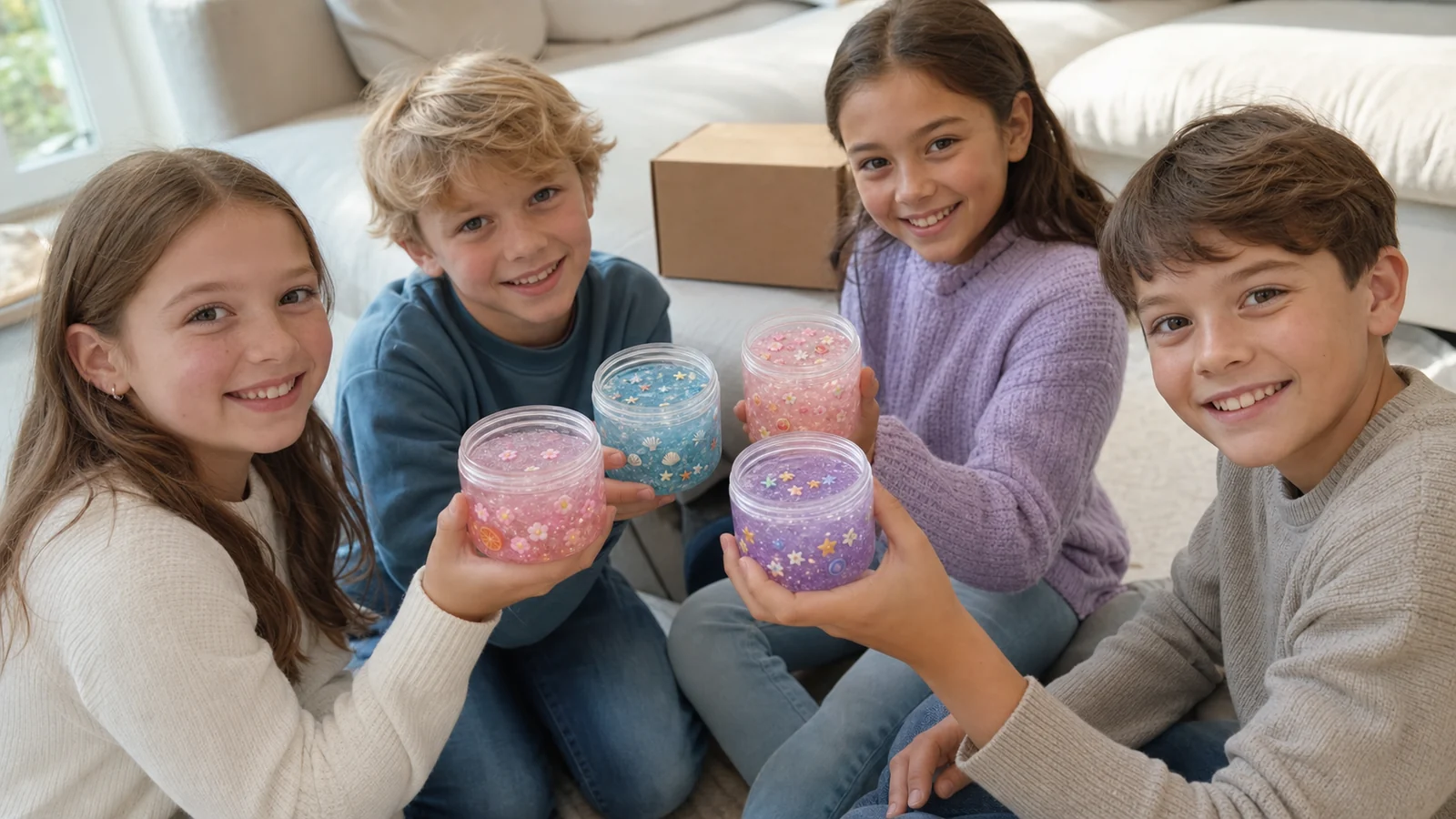
New slime sellers often try to source everything from one place and stall. The faster route is splitting the list by where each item is actually cheapest and safest to buy:
| Buy locally / anywhere | Buy from a craft-supply factory |
|---|---|
| Glue and activator — heavy, regulated as chemicals, cheap locally | Themed charm and sprinkle packs that define each slime |
| Scent oils and colorant | Bingsu beads, fishbowl beads, glitter sequins for texture |
| Shipping cartons for your outbound orders | Resin collector charms and clay slices as toppers |
| Labels printed to your local rules | Jars, PET bottles, OPP bags and private-label packaging |
The left column never crosses an ocean well. The right column is exactly what a Yiwu factory line produces — and consolidating it into one order means one QC pass and one shipment instead of five.
Buyers who pick add-ins by photo end up with pretty jars that all feel the same. Slime customers re-order by texture, so stock at least one line per texture family:
| Texture family | Add-in | Where it lives |
|---|---|---|
| Crunch | Bingsu beads (500g bulk bags), fishbowl beads | Glitter & fillers line |
| Topping | Polymer clay slices — fruit, floral, holiday shapes | Clay sprinkles line |
| Collector piece | One resin charm per jar as the “prize” | Resin charms line |
| Sparkle | PET glitter sequins, gram-packed | Glitter & fillers line |
The most expensive mistake in a first order is bulk-buying a theme nobody wants. Our slime packs are built to make the trial cheap: every theme starts at a 30g trial bag and scales to 500g and 1000g bulk of the same recipe, and stock items sell from 1 bag with no minimum-order barrier. So the launch sequence looks like:
Three materials cover almost every add-in on a slime supply list, and they behave differently in a wet base:
Knowing which is which saves you from the two classic mistakes: mixing a surface topping through the base where nobody sees the detail, and buying a filler that softens or bleeds after a week on a shelf.
A zip bag says hobby; a labeled jar says brand. Packaging options run from OPP bags to PET bottles, jars and compartment boxes — the packaging comparison guide walks through cost and shelf logic, and the private-label guide covers putting your own name on the line from day one.
Slime add-ins are decorative and non-edible, and the label has to say so — especially for anything shaped like food. If your jars target kids channels or marketplaces, buyers commonly ask for EN 71, ASTM F963, CPC or CPSC-CH-E1002 paperwork; REACH applies for EU-bound orders. Batch test reports are available on request — the quality & safety page lists the full set, and the safety labeling guide has copy-paste warning wording.
First reply within 3 working hours. Complete specs come back as a full quote with packaging format and lead time in 12–24 hours.
Trial 5–8 themes in 30g bags first, then scale only the 2–3 that sell into 500g or 1000g bulk of the same recipe. Confirm current availability and whether trial and bulk packs use the same approved mix before ordering.
All add-ins are decorative and non-edible and must be labeled that way. If your kits target kids channels, retailers commonly ask for EN 71, ASTM F963 or CPC paperwork — batch test reports are available on request, and the safety labeling guide covers the wording.
Yes. Our nine lines span clay slices, resin charms, bingsu and fishbowl beads, glitter sequins and private-label packaging — so one consolidated order covers the add-in half of a slime supply list.
Compare clay slices and resin charms for slime by texture, dosing, sample checks and sourcing needs.
Read guide →Work backward from your launch date to plan samples, packaging, production and shipping for seasonal collections.
Read guide →Pick the filler by the texture you sell, then match the topping to it.
Read guide →